


2019 World Industrial and Energy Internet Summit, an important part of the 2019 World Industrial and Energy Internet Expo (WIEI), has pooled experts, scholars and representatives of enterprises to share ideas and experiences on a broad range of topics.
Seven guests speakers, including Prof. Tim Green, fellow of the Royal Academy of Engineering and Professor of Imperial College London and Stephen J. Mellor, chief technical officer of Industrial Internet Consortium were invited to give keynote speeches.
Here are some highlights of the ideas in the keynote speeches at the 2019 World Industrial and Energy Internet Summit.
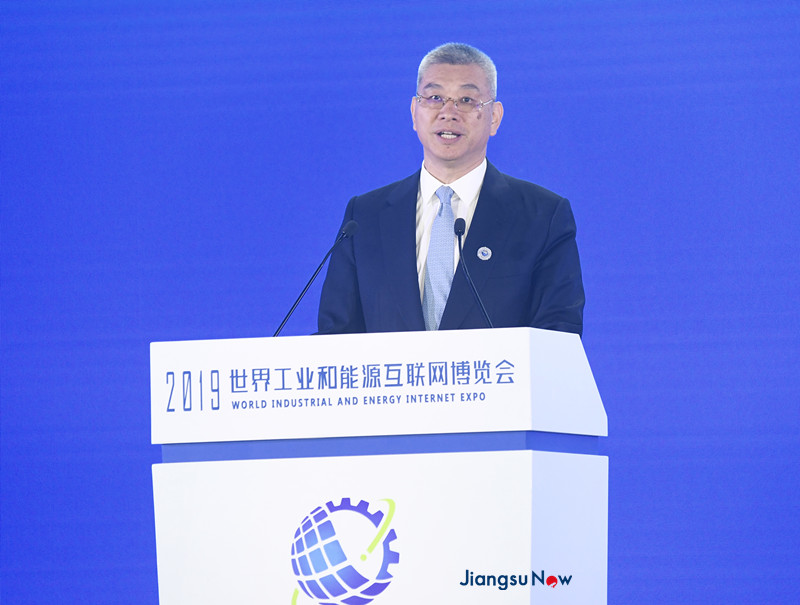
Xu Wenwei, Director of the Board, President of the Institute of Strategic Research Huawei Technologies Co., Ltd. (Photo by Yu Ping, Chen Yan)
“The core of the industrial internet is ‘industry’. Only when we understand the industry can we make goo ICT applications in industrial enterprises. And the core barrier of the industrial internet is industrial know-how. Only when we enable and integrate industrial know-how can we make industrial internet platforms a success.
“In terms of industrial internet development, we need to focus on platforms in the short run and on networks in the medium and long run. There have already been bottlenecks for boosting production efficiency by robots only. Industrial internet platforms are a key link in the industrial total-factor chain and are at the core of industrial resource allocation. They facilitate ubiquitous connections, flexible supply and efficient allocation of industrial resources.”
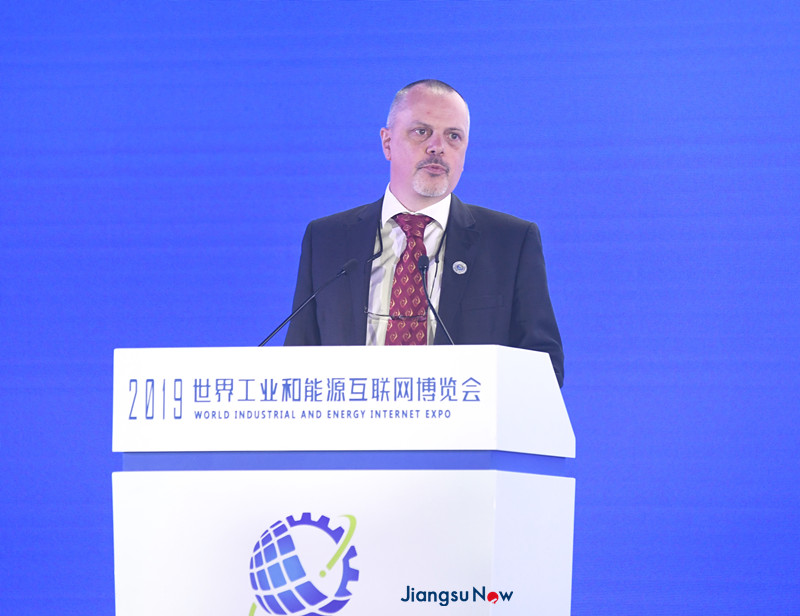
Tim Green, fellow of the Royal Academy of Engineering, Prof. of Imperial College London Co-directors of Energy Future Lab. (Photo by Yu Ping, Chen Yan)
"As we use more variable renewable generation, we displace fossil fuel generation and its emissions of greenhouse gases but we also lose useful ability of fueled-generation to quickly respond to changes in energy demand.
"More extensive data on demand in fine-grain locational and temporal detail will help us identify and influence energy demand that can be delayed, brought forward or reduced. We will also develop smart ways of providing security by better understanding dynamic limits on equipment based on sophisticated assets histories rather than simply providing redundancy.
"Decentralized control, and new power electronic devices to exercise control, will enable systems to provide some of the power quality and balancing services traditionally provided centrally."
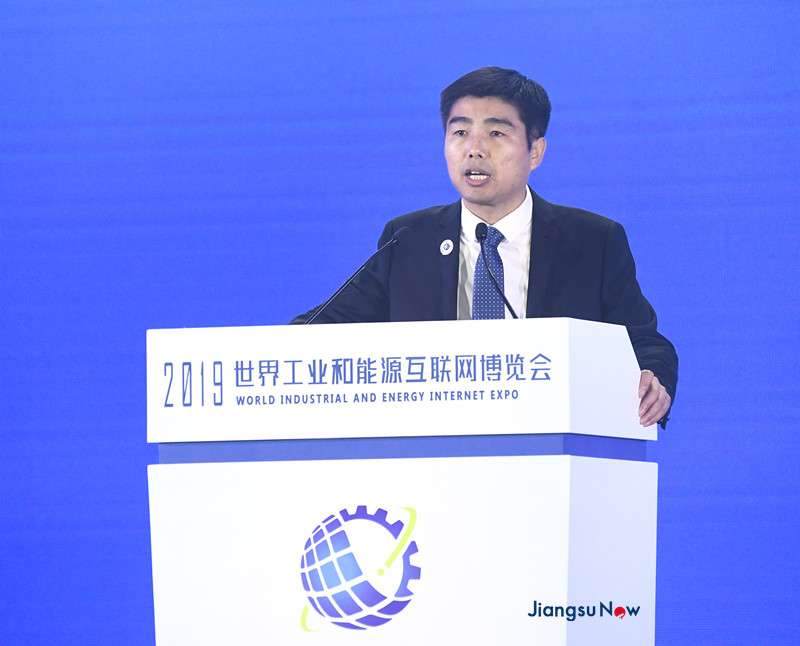
Zhang Qiliang, CEO of Jiangsu XCMG Information Technology Co., Ltd.( Photo by Yu Ping, Chen Yan)
“The industrial internet is transforming the traditional manufacturing industry to a more service-oriented model. Industrial internet platforms can not only serve clients’ high-level needs, but also provide targeted and active services, thus bringing more satisfaction to clients.
“There are four directions of industrial-internet-driven digitalization for manufacturers.
1. Digitalization can help transform complete-equipment-solution providers to full-scenario smart empowerer;
2. Digitalization can help create a service-oriented manufacturing model, thus making post-market services a new growth engine for manufacturers;
3. Digitalization can help cut clients’ full-life-circle costs, thus creating customer value;
4. Digitalization can help with smart innovation of products.”
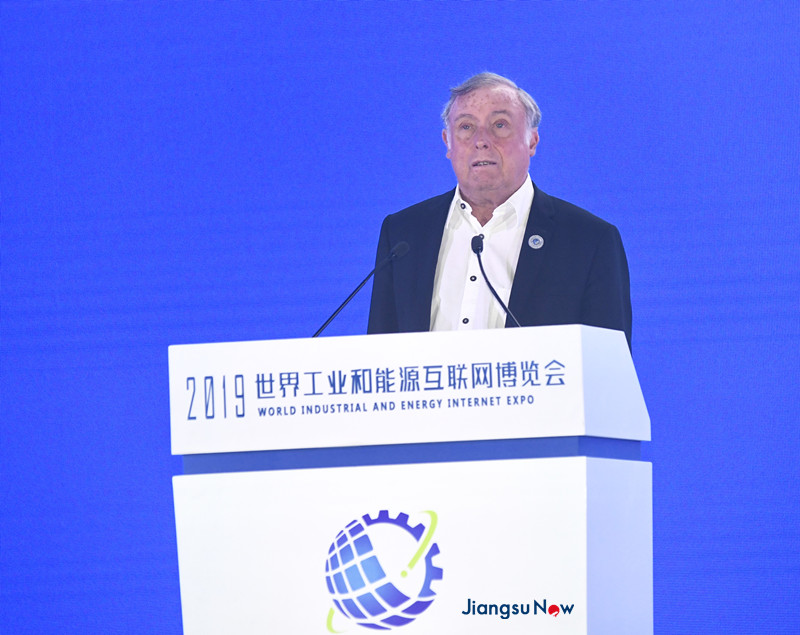
Stephen J. Mellor, Chief Technical Officer of Industrial Internet Consortium (Photo by Yu Ping, Chen Yan)
“The industrial internet, particularly in energy and manufacturing, is maturing. Companies are moving from experiments to changing their strategy to focused investment. Some of them are not. This is to be expected.
“Any new technology excites technologists and gathers great interest in that community, even as technology is deployed in verticals such as energy and manufacturing. Then we see that works.
“This is progress, even if the project fails. That’s why we build testbeds, such as in asset efficiency, condition monitoring, workforce safety, factory automation, factory operations visibility and intelligence, smart energy management and distributed energy resources integration.”